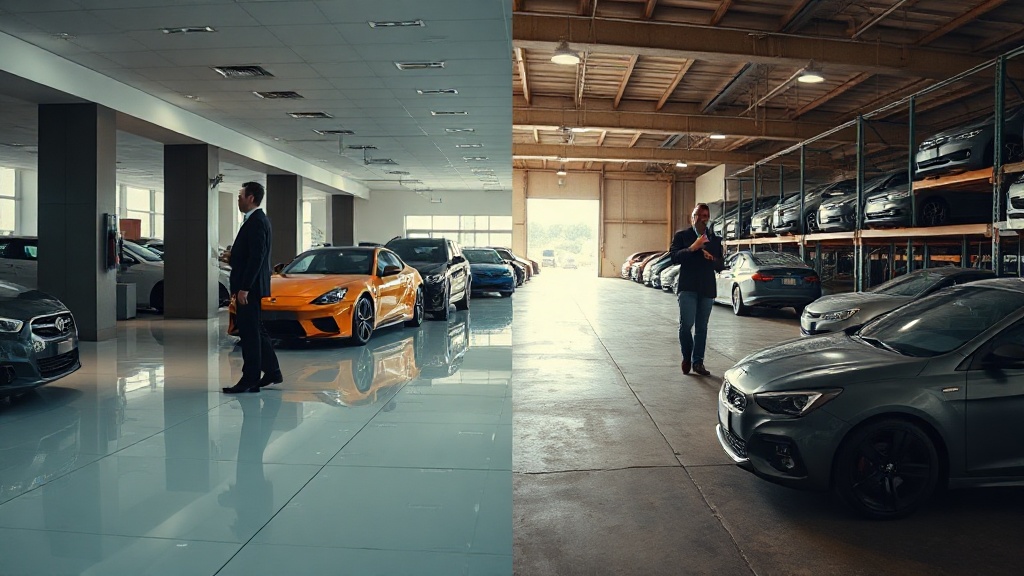
How to Find Car Deals at Auction — The FlipLane Guide
Every car at auction has a story before it arrives on the lot. The dealers, the insurers, the banks — they all decided this car was worth letting go. And in that moment of letting go, they created an opportunity. This guide walks you through finding car deals at auction — from pre-listing research and condition codes to setting your hard maximum bid and building the mechanic relationships that make flipping sustainable. Whether you are new to car flipping or returning to sharpen your strategy, this is where your next profitable flip begins.
# How to Find Car Deals at Auction
Every great journey begins with a single step — and sometimes, that step is a door marked "Authorized Bidders Only."
I remember the first time I walked into an auto auction. The fluorescent lights. The smell of oil and concrete. A hundred strangers sizing up the same ten cars, calculating in real time who would blink first. It felt like the world was running a test, and I had no answers.
That feeling — that quiet panic of not knowing the rules — is exactly what keeps most people out of the auction lane and on the sidelines of the car flipping world. They watch others drive off in cars that cost a fraction of what they would pay at a dealership, and they tell themselves the deals are gone. The market is too competitive. It's rigged.
It is not rigged. It is simply a different game — and like all games, it rewards those who learn the rules.
So today, let's learn them.
## The Auction Is Not Where You Find Deals. You Find Them Before You Walk In.
This is the single most important sentence in this entire guide, and most beginners miss it entirely.
The cars you see on auction day have already been catalogued, photographed, and posted online. Every major auction house — Copart, IAAI, Manheim, your local govdeals site — publishes its inventory days or weeks in advance. This is your secret weapon. This is where the real work happens.
A car sitting on a lot for $4,000 looks like a deal until you notice it needs a new transmission. A $9,000 vehicle looks expensive until you realize it has four years of clean service records and new tires on all four corners. The difference between a profitable flip and a costly mistake lives in the hours you spend before the auction ever starts.
Before you attend any auction, spend at least three days studying the pre-listing. Use your phone. Screenshot every car that catches your eye. Then go home and research each one. What is this model trading for on Kelley Blue Book? What are the common maintenance issues? Is the title clean or branded?
You are not looking for a car. You are looking for a story. The auction is where the final chapter gets written — but the book is written in advance.
## Every Number Has a Meaning. Learn to Read Them.
When a flippers reviews a pre-listing, there are four numbers that matter above all else:
The opening bid. The year, make, and model. The mileage. And the condition grade.
The opening bid tells you where the seller starts. It is not where the car is worth — it is simply where the conversation begins. A $500 opening bid on a 2019 Honda Civic sounds exciting until you discover it has 180,000 miles and water damage. The price is not the value. The price is the bait.
The condition grade — usually published as a letter or code — tells you what the auction inspector found. Most buyers scroll past this. Smart flippers read it like a doctor's report. "Light damage to front bumper" means something different than "structural damage to unibody." Learn the condition codes before you bid. They are the difference between a car that can be flipped in two weeks and a car that will sit in your driveway for six months.
And the title status? This is non-negotiable. Never bid on a car without confirming the title status. A salvage title is not always a deal-breaker — but it is always a different game, with different buyers, different lenders, and different margins. Know what you are buying before you raise your hand.
## The Art of Walking Away Before You Bid
This is the part no one teaches.
In every auction room — physical or online — there are cars that seem like they should be deals and are not. A $3,000 Toyota with a clean title sounds great until you calculate the inspection, the transportation, the registration, and the hour or two you will spend waiting in line. At the end of that math, your profit disappears.
The flippers who last — the ones who do this month after month, year after year — are not better at finding cars. They are better at letting cars go.
Set a hard number before you walk in. The maximum you will pay, including fees, transportation, and estimated repairs. Write it on your phone. Set a reminder. When the bid hits that number, you are done. Not almost done. Done.
This feels counterintuitive. The car is right there. The deal is right there. But the deal that destroys your margin is not a deal at all — it is a lesson you overpaid for.
The world will always present you with another opportunity. The auction will always have another car. Your capital is finite. Spend it on the flips that make sense, and let the rest go.
## The People Who Help You Win
No one flips cars alone.
Behind every profitable flip is a small circle of people who made it possible. The tow truck driver who gets the car from the lot to your driveway. The mechanic who tells you the truth about what is wrong instead of what it costs to fix it. The title service that handles the paperwork while you move on to the next deal.
These relationships are not incidental. They are infrastructure. A flippers who has a mechanic who answers the phone on Sunday morning is worth ten flippers who has to Google "auto repair near me" every time something goes wrong.
When you find people who are good at their work, pay them fairly and on time. Treat them like partners. Share the business you have. In a world where most people are looking to extract value, be the person who adds it.
Because the auction is not just a market for cars. It is a market for trust. And trust, once built, compounds faster than any car you will ever flip.
## The Road Ahead
You came here looking for a way to make money flipping cars. You found something more important: a new relationship with your own future.
The auction is available to anyone with a computer and a willingness to learn. It does not care about your background, your credit score, or how many times the world told you no. It only cares about what you are willing to do before the doors open.
Start with one car. Study it completely. Bid carefully. Flip it. Learn what worked and what did not. Then do it again.
The road to financial freedom is not hidden. It is paved in pre-listings, condition codes, and hard conversations with mechanics. It is waiting for you at 9 AM on a Saturday morning, in a warehouse somewhere in your city, surrounded by a hundred people who have all decided to stop waiting for permission.
Your keyword here is how to find car deals at auction — and now you know. The deals are real. The path is clear. And the only person standing between you and your first profitable flip is the decision to walk through the door.
The Lane Report
Get The Lane Report — Weekly Wholesale Market Intelligence
Car market data. Auction insights. Deal tips. No dealer fluff.
✓ You're in. Check your inbox.
Frequently Asked Questions
How do I know which cars are worth flipping at auction?▼
Study the pre-listing before auction day. Screenshot candidates, research each on KBB, check condition codes. The car worth flipping is one where purchase price plus all carrying costs leaves at least $1,500-2,000 margin after sale.
What is the most important auction document to read?▼
The condition grade. It tells you what the inspector found — structural damage vs. light bumper damage. Smart flippers read condition codes like a doctor reads a report.
Should I ever bid without knowing the title status?▼
Never. Confirm title status before you bid. A salvage title is not always a deal-breaker, but it changes the buyer pool, lender options, and margins — know what you are buying.