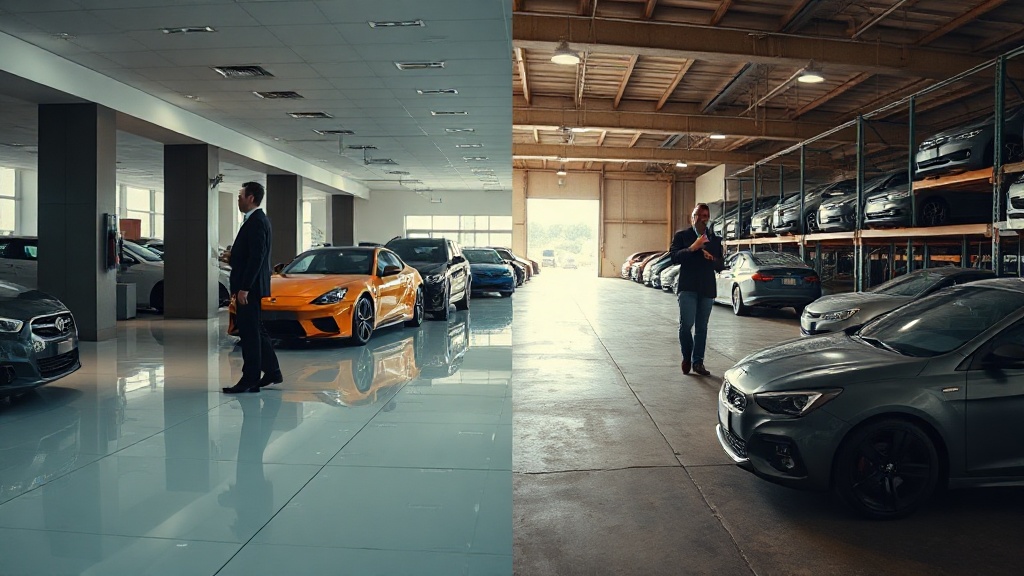
The Used Car Buying Hierarchy (By Price)
The hierarchy is clear: franchise lots add $5,000–$9,000 above wholesale, while FlipLane members buy at the wholesale prices that anchor the entire system.
Here is how every buying method stacks up, from most expensive to least:
| Method | Average Premium vs. Wholesale |
|---|---|
| Franchise dealership (new car lot selling used) | $5,000–$9,000 |
| Independent used car lot | $3,000–$6,000 |
| Buy-here-pay-here lot | $4,000–$8,000 + predatory rates |
| Private party (Craigslist/Facebook) | $1,500–$3,000 (but no warranty, no recourse) |
| Wholesale auction (dealer access) | $0–$500 above actual wholesale |
The gap between franchise dealership pricing and wholesale auction pricing is not a small number. On a $25,000 car, the difference is often $4,000–$7,000.
Why Private Party Is Not Actually the Cheapest
Private party sales (Facebook Marketplace, Craigslist, Autotrader) are often cited as the "cheap" option. They can be — but they come with hidden costs:
- No warranty — You are buying as-is with no legal recourse if something breaks
- No inspection accountability — Most sellers do not provide condition reports
- Title and payment risk — Wire fraud and bad titles are common in private sales
- No financing leverage — Private sellers rarely offer financing or accept trade-ins
A $17,500 private party car that has undisclosed frame damage costs more than a $19,500 auction car with a full condition report and post-sale arbitration protection.
What Makes Wholesale Auctions the Cheapest
Wholesale auctions are the cheapest because: prices are market-driven (no MSRP markup), competition is transparent (dealers bid, market clears at fair value), volume keeps prices competitive, and there is no retail overhead (no showroom, no sales staff, no F&I departments).
Manheim processed 8 million vehicle sales in 2025, generating $75 billion in transactions. That scale keeps prices at true market value — not inflated for retail margins.
How to Actually Execute Wholesale Buying in 2026
FlipLane members access the same auction inventory dealers use — Manheim, ADESA, and others — at wholesale prices. No dealer license required.
The process: Join ($250 lifetime) → Browse (current auction inventory with condition reports) → Bid (live simulcast auctions) → Win (hammer price + 3–5% auction fee) → Receive (vehicle transported within 7–14 days).
Total cost: wholesale price + auction fee + transport. No markup. No F&I products. No games.