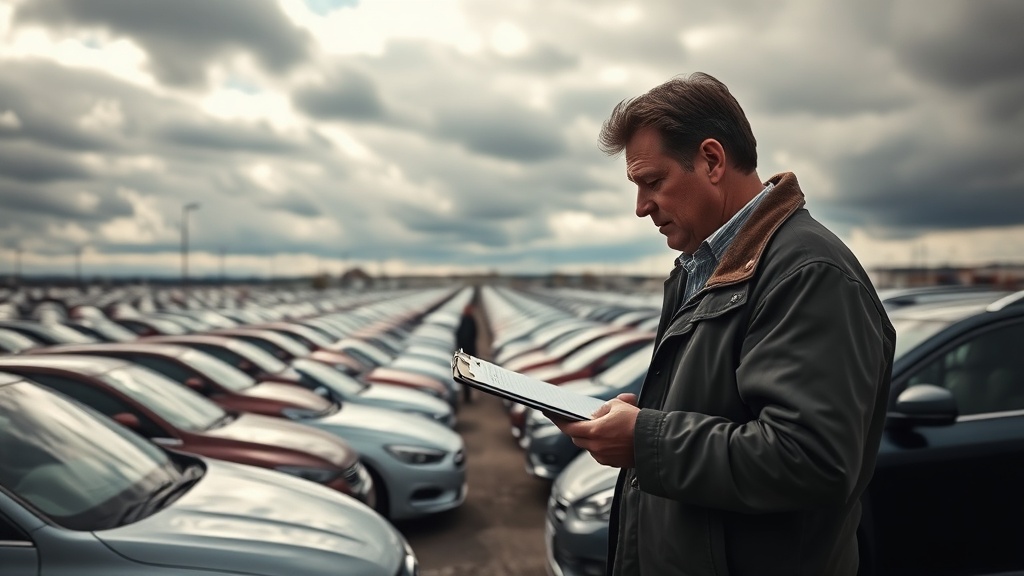
The Car That Taught Me Everything About the Path
A practical guide to the car that taught me everything about the path — strategies, numbers, and the mindset you need to succeed in car flipping.
# The Car That Taught Me Everything About the Path
There is an old story — not from any book you will find on a shelf, but from the kind of wisdom that lives between the lines of every transaction, every risk, every moment a person decides to trust themselves — about a man who stood in a dusty lot staring at a damaged car. It was not much to look at. The hood was crumpled. The paint had surrendered to rust along the passenger door. But the man saw something the others did not see. He saw what the car could become, not what it was.
That is the beginning of every great journey. Not the destination. Not the profit. The moment you see potential where others see only wreckage.
The world of car flipping is, at its heart, a parable about faith and preparation. It asks you the same question the desert asked Santiago in his journey toward the pyramids: do you trust what you know enough to act on it? The answer, as with all things worth pursuing, begins not with certainty but with a first step — and for many who walk this path, that first step is finding your way through the door of the wholesale auto auction login.
## The Gate You Must Learn to Open
Every journey has a threshold. In ancient stories, the hero always faces a gate — sometimes guarded by a riddle, sometimes by a toll, sometimes simply by the weight of their own hesitation. In the modern world of vehicle flipping, that gate is the wholesale auction platform.
There are several well-traveled roads that lead to this gate. Platforms like Manheim, ADESA, and TradeRev have become the beating heart of the wholesale vehicle market in North America. Together they process hundreds of thousands of vehicles each week, and somewhere in that river of steel and rubber, your opportunity is moving past. But to access it, you must first complete your wholesale auto auction login — and that requires credentials that not everyone is handed freely.
Most major wholesale auctions require a dealer license to register. In most states, that license costs between three hundred and a thousand dollars annually, and it demands a physical lot address, a bond, and a background check. This is not a punishment. It is the desert's way of asking how serious you are. The license is not the destination — it is proof that you are willing to pay the price of admission before the treasure is revealed.
Once you have your credentials, the platform itself becomes a kind of language you must learn. On Manheim, you will find condition reports, arbitration policies, and the all-important MMR — the Manheim Market Report — which functions like a compass, telling you the average transaction price of any given vehicle in the current market. A car with an MMR of fourteen thousand dollars bought at wholesale for ten thousand five hundred dollars is not a car. It is a margin. It is a story with a happy ending, if you read it correctly.
Do not rush the login. Do not rush the registration. The gate exists to test your patience, and patience is the first skill of the profitable flipper.
## Reading the Car Like a Desert Sign
The Alchemist teaches us that the universe speaks in omens — small signs that point the way if we are humble enough to notice them. At a wholesale auction, those signs are written in the condition report.
Every vehicle on a major auction platform comes with a numbered condition grade, typically on a scale from one to five. A grade four vehicle is clean, low miles, nearly ready to retail. A grade two vehicle has seen things. It carries secrets in its frame rails and apologies in its paint code. Neither is inherently good or bad — what matters is whether the price reflects the truth.
The practical wisdom here is simple but often ignored by newcomers: never bid on a vehicle you have not fully evaluated. In a physical lane auction, you have a brief window to walk the lot, pull the carfax, and trust your instincts. In an online wholesale auto auction login environment, you are trusting the condition report and the photographs entirely. This is where experience becomes your greatest asset. A flipper with three years of auction experience can look at a photograph of a door jamb and know whether the car has been in a structural accident that no report disclosed. That knowledge is not magic. It is accumulated attention.
Before you bid, know your numbers. Know the cost of the repair. Know the retail value in your specific market — because a pickup truck worth seventeen thousand in rural Texas might bring only fourteen thousand in a coastal city where trucks are less in demand. Know your holding cost: insurance, lot fee, fuel, and the thirty to sixty days it may sit before the right buyer arrives. When you subtract all of that from your expected retail price, the number that remains is the maximum you should pay at auction. Not a dollar more.
The universe rewards those who do their homework. It does not reward wishful thinking, no matter how sincere.
## The Margin Is the Message
There is a moment in every flip when the numbers either sing or go silent. That moment arrives when you list the car for sale and the phone either rings or it does not. The margin you built at the auction is the foundation of everything that follows.
In wholesale vehicle flipping, the most durable business model targets a gross margin of two thousand to four thousand dollars per vehicle. That may sound modest until you understand that a disciplined flipper moving five to eight cars per month is generating ten thousand to thirty thousand dollars in gross profit — before expenses, yes, but a business with real heartbeat. The key word is disciplined. The margin is not found at the retail lot. It is not found in the negotiation with the buyer. It is found — or lost — the moment you submit your bid through that wholesale auto auction login screen.
This is the parable inside the parable. Most people believe that money is made when something is sold. The wise ones know it is made when something is bought. The exit is only as good as the entry.
Timing matters too. The auction market breathes with the seasons. In January and February, tax refund season begins to warm, and demand for affordable vehicles climbs. In August, back-to-school creates a secondary surge. In November and December, the market often softens, which means lower hammer prices for those willing to buy while others are distracted by holidays. Read the rhythm. Align your purchasing with the seasons of demand, and your margins will widen without any additional effort.
## The Return and the Renewal
A car flip is rarely a single transaction. It is a cycle. You buy, you prepare, you sell, and you return to the auction. Each return teaches you something the previous cycle could not. You learn which makes hold value in your market. You learn which repair shops turn vehicles in seven days and which ones hold your money hostage for three weeks. You learn your own psychology — whether you panic and drop the price too early, or hold too long out of stubbornness.
The wholesale auto auction login you use today is not just a portal to inventory. It is a portal to a version of yourself that is more capable than the one who first clicked register. Every experienced flipper carries a mental library of deals — the ones that worked, the ones that humbled them, the ones that seemed impossible and turned into their best months.
The path of the vehicle flipper is, like all meaningful paths, a path of self-knowledge dressed in the practical clothing of commerce. The cars are teachers. The auctions are classrooms. The margins are report cards, honest and unsparing.
When you finally drive a vehicle off the auction block — physically or digitally — and you know in your bones that you bought it right, prepared it with care, and placed it in front of the person who needed it, something larger than profit has occurred. A transaction has been completed, yes. But so has something quieter: the proof that you trusted your preparation, honored your numbers, and followed the path even when the gate seemed heavy.
The man in the dusty lot with the crumpled hood eventually drove away in something better. Not because luck found him. Because he learned to read the signs.
The Lane Report
Get The Lane Report — Weekly Wholesale Market Intelligence
Car market data. Auction insights. Deal tips. No dealer fluff.
✓ You're in. Check your inbox.
Frequently Asked Questions
Do I need a dealer license to use a wholesale auto auction login?▼
Yes, most major wholesale platforms like Manheim and ADESA require a valid dealer license to register and bid, which typically costs between three hundred and one thousand dollars annually depending on your state.
What is a realistic profit margin when flipping cars through wholesale auctions?▼
Most disciplined flippers target two thousand to four thousand dollars gross per vehicle, and those moving five to eight cars monthly can generate ten thousand to thirty thousand dollars in gross profit before overhead expenses.
How do I know if I am paying the right price at a wholesale auction?▼
Use the Manheim Market Report as your price compass, subtract all estimated repair costs and holding expenses from your expected retail price, and never bid above the number that remains.
FlipLane Co-op
Ready to H.E.A.R.T. the opportunity?
Join the FlipLane Co-op — $250/lifetime access to wholesale auctions, AI pricing tools, and a community of 500+ operators running the same playbook.
Join Now →Instant access · Works nationwide · No dealer license required